

In 2026, five key trends are shaping the fleet industry’s roadmap: advanced telematics, AI-powered cameras, integrated safety and performance ecosystems, FMIS consolidation, and data-driven fleet rightsizing.
1. Fleet Telematics Trends 2026: Operational Costs, Tracking, and Intelligence
According to recent industry research, the top outcome fleet managers pursue is improved asset utilization, reflecting a shift toward using telematics data to drive strategic decisions rather than just track locations, affecting both operational efficiency and cost (Verizon, 2026).
Modern telematics devices collect a mountain of data: GPS location, speed, idle time, engine diagnostics (DTC codes), fuel use, driver behaviors, PTO usage, and more. The challenge for large fleets is no longer data collection but using proper fleet technology to make sense of it.
Managers often lament, “We have the data, but we are not getting the full value out of it.” This frustration stems from data silos and lack of context, as telematics alone can’t answer complex operational questions in isolation.
By integrating telematics data with other fleet systems you gain a unified, trustworthy view of your operations.
Key capabilities trending in telematics for 2026 include:
- Predictive Analytics for Maintenance: Predictive maintenance programs that combine sensor data with machine learning can materially improve uptime; one data-driven fleet management framework reported 25–30% lower unplanned downtime and 15–20% lower maintenance costs across multiple case studies (Kaushik, 2025).
- Safety and Risk Scoring: In a commercial-driver evaluation of an in-vehicle monitoring system, risky driving behaviors declined significantly more when real-time in-cab feedback was paired with supervisory coaching, when compared with feedback alone (Bell et al., 2017).
- Route and Fuel Optimization: Real-time data helps dynamically adjust routes and pinpoint fuel waste or unauthorized fuel-ups when paired with fuel card data.
- Utilization and Lifecycle Management: Telematics data can be used for lifecycle planning models that tell you when to retire or redeploy vehicles for optimal ROI.
Real-world Cases: By uniting Geotab telematics data with a fleet’s maintenance (FMIS) data, fragmented data turns into clarity. One emergency response fleet gained real-time visibility into assets, improved diagnostic accuracy, and reduced downtime through proactive maintenance.
2. AI-Powered Cameras
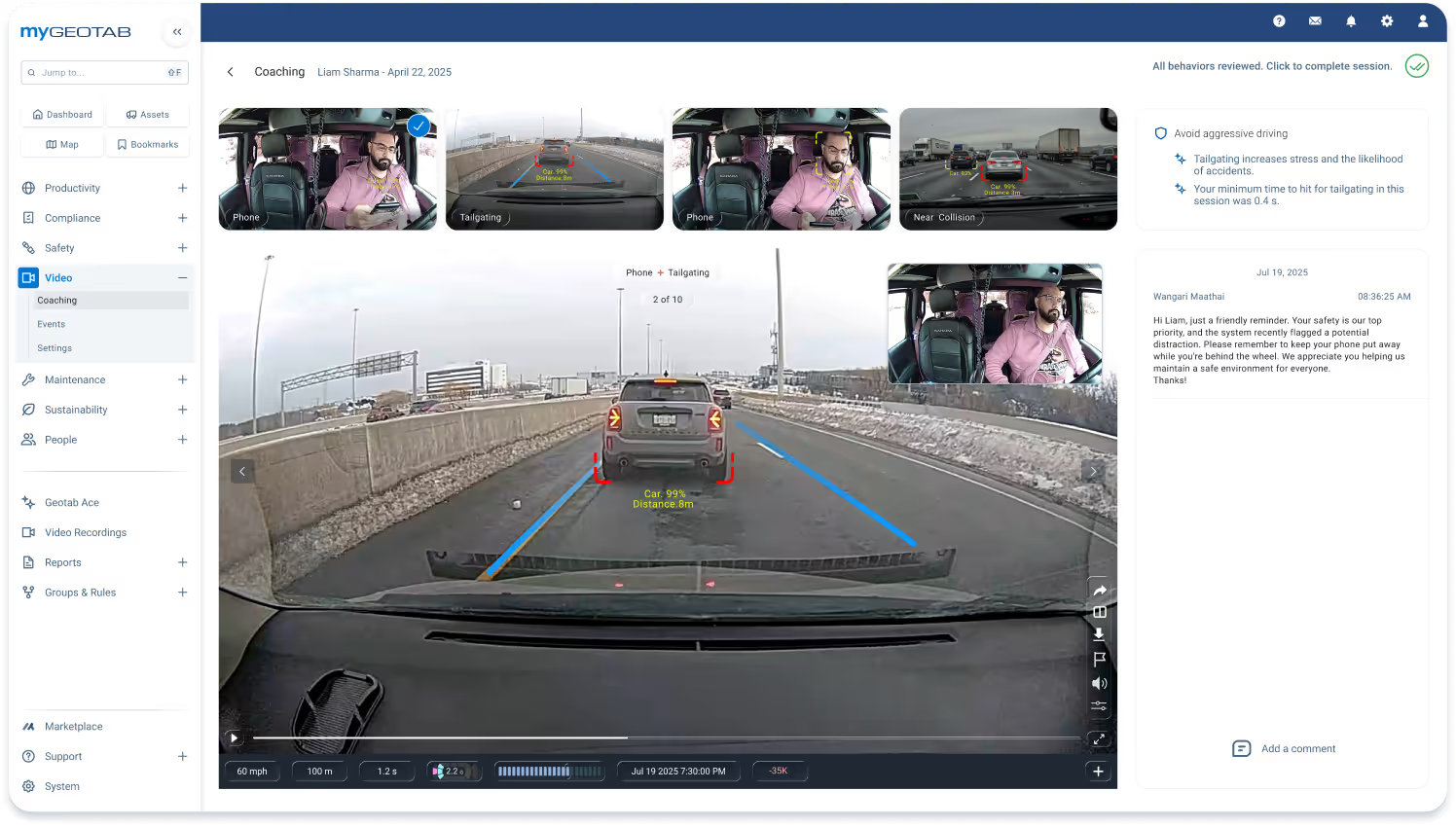
In 2026, AI fleet safety cameras will continue to be a fast-growing trend as fleets shift from reactive incident recording to proactive risk prevention. Edge computing has turned these cameras into real-time co-pilots for drivers and coaching tools for leaders.
Modern AI dash cams actively detect and alert on:
- Driver Distraction: Recognizing signs such as a driver looking down at a phone.
- Drowsiness & Fatigue: Monitoring facial cues to catch drowsiness early.
- Following Distance & Speed: Gauging tailgating or hard cornering.
- Lane Departures & Rolling Stops: Signaling potential risk when a vehicle drifts or fails to stop.
When an AI camera detects a danger sign, it delivers an immediate in-cab audio alert to prevent incidents before they happen. If the driver self-corrects, many systems will help to treat it as a self-coached moment. This approach reinforces a culture of safety through accountability rather than fear.
3. Integrated Safety and Performance Ecosystems
As adoption grows, the role of video telematics is expanding beyond event review. Telematics performs best as part of a broader program because organizations realize stronger outcomes when this data is consistently used to guide coaching and training, rather than treated as a standalone monitoring tool (Together for Safer Roads, 2025).
For example, some fleets combine driver training frameworks like the Smith System 5Keys with Utilimarc’s analytics to track performance trends before and after coaching. This connected model helps fleets move past alert fatigue toward targeted, measurable risk reduction.
By integrating hardware, training, operational, safety, and performance data into a single ecosystem, fleets can better understand driver behavior, reinforce safety standards, and establish consistent safety programs across their entire operation.
4. FMIS Consolidation: Unifying Fleet Management Systems
The push toward FMIS integration unifies the Fleet Management Information System (FMIS) with all other fleet data sources. This fragmentation has been a major pain point, leading to redundant data entry and missed insights.
Key Advantages of FMIS Integration:
- Automated Data Flow: Odometer readings and engine hours flow directly from telematics into the FMIS, ensuring accurate PM triggers without manual data entry.
- Holistic Asset Visibility: A manager can view real-time location, recent maintenance, upcoming service, fuel consumption, and safety alerts from a single dashboard.
- Cross-System Insights: Linking fuel transactions with GPS data can flag anomalies, such as fuel purchases far from a vehicle’s location.
- Streamlined Workflows: A diagnostic trouble code (DTC) from telematics can automatically generate a repair request in the FMIS and alert the maintenance manager.
- Fewer Systems, Lower Costs: Consolidation reduces software licensing, training time, and manual data wrangling.
Real-world Example: Utilimarc’s Motor Pool App can fully integrate with both FMIS and telematics. As a vehicle is reserved, the app pulls usage data and links it to the system record, automatically updating utilization statistics. This helps fleets flag underutilized vehicles and support data-backed rightsizing decisions.
5. Data-Driven Fleet Rightsizing: Fleet Strategy and Operational Efficiency
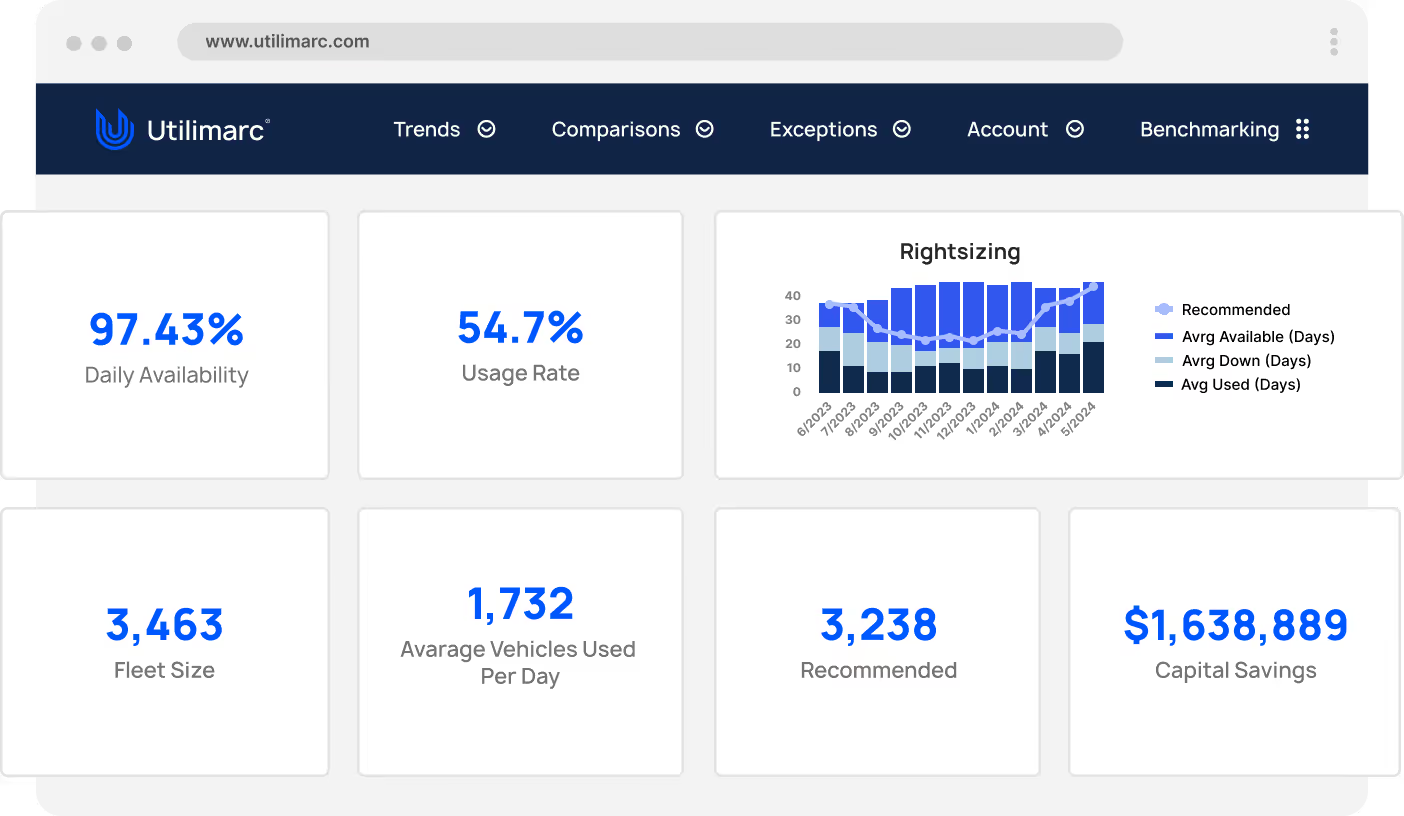
Ensuring you have “just the right” number and mix of vehicles, at the right locations for the right jobs remains a priority for 2026. Today’s rightsizing is data-driven, continuous, and intentional when it comes to operational costs.
What’s Driving the Rightsizing Trend in 2026?
- Rising Costs: High capital prices and rising maintenance costs mean excess vehicles are a luxury that fleets can’t afford.
- Better Data Availability: Telematics show miles driven and engine hours, while maintenance systems reveal downtime and costs. Together, this removes guesswork.
- Strategic Value: Shedding unnecessary units frees capital to reinvest in modernization and build credibility with stakeholders.
- Emergency Preparedness: Data helps determine how many vehicles are needed to cover realistic peak-demand scenarios, so fleets can justify necessary spares while eliminating those rarely used.
How Modern Rightsizing Works:
- Integrate multi-system data: Combine telematics, work orders, and fuel usage. An operations truck with low miles may still be essential if it has high PTO hours for critical jobs.
- Set tailored utilization benchmarks: What counts as “under-utilized” varies by vehicle type and role.
- Engage stakeholders: Fleet managers bring department heads and field supervisors into the conversation with clear data on vehicle usage to build consensus.
- Model scenarios and outcomes: Analytics help simulate removing a portion of the fleet to see the impact on maintenance costs, capital needs, and service levels.
Proven ROI: Utilimarc helped a large utility analyze its fleet and found that 12 vehicles were never used even on the busiest day. Those assets represented $2.76 million in value sitting idle. By removing just half, the fleet avoided roughly $1.3 million in capital costs.
In another case, rightsizing analysis of a utility’s bucket trucks showed the fleet only needed 80% of its trucks to meet 95% of demand, saving $1.7 million in planned purchases.
Fleet Electrification Reality Check: Regulation, Incentives, and Adoption
In 2026, fleets feel increasing pressure to move beyond pilots as increased emissions regulations tighten, including the U.S. EPA’s finalized standards for model year 2027 and later light-duty and medium-duty vehicles that raise compliance expectations beginning in 2027 (U.S. Environmental Protection Agency, 2024).
At the same time, a cooling EV market is showing up in slower growth rates. Global EV registrations still reached about 20.7 million in 2025, but growth is projected to moderate in 2026, which can influence lead times, pricing strategy, and residual value confidence for fleet planning (Parodi, 2026).
Budget math is shifting too as federal incentives expire or become unavailable for certain purchase windows. The IRS states the clean vehicle credit is not available for vehicles acquired after September 30, 2025, which means many 2026 plans must rely more on operational fit than incentives to close the cost gap (Internal Revenue Service, 2025).
Fleets that stay on track address EV transition challenges early by validating route duty cycles and dwell time for charging, sizing chargers for peak demand, planning depot electrical upgrades with realistic timelines, accounting for cold-weather performance where relevant, and building technician readiness for high-voltage service so uptime and service levels are protected.
Embracing the Future of the Fleet Industry
The trends defining fleet management in 2026 are all interlinked pieces of a bigger picture: smarter, more connected operations. By embracing these trends, fleets achieve safer driving through proactive alerts, lower costs via optimized asset counts, and better efficiency by eliminating data silos.
Utilimarc is here to help at every stage of this journey, working alongside fleets to harness data and drive meaningful improvements. Contact our team to learn more.
References
Bell, J. L., Chen, G. X., Kirk, R. D., Leatherman, E. R., & Taylor, M. A. (2017). Evaluation of an in-vehicle monitoring system (IVMS) to reduce risky driving behaviors in commercial drivers: Comparison of in-cab warning lights and supervisory coaching with videos of driving behavior. https://stacks.cdc.gov/view/cdc/203684
Internal Revenue Service. (2025, December 15). Clean vehicle tax credits. https://www.irs.gov/clean-vehicle-tax-credits (irs.gov)
Parodi, A. (2026, January 14). Global EV sales growth is likely to slow after a 20% jump in rocky 2025, a research firm says. Reuters. https://www.reuters.com/sustainability/climate-energy/global-ev-sales-growth-likely-slow-after-20-jump-rocky-2025-research-firm-says-2026-01-14/ (Reuters)
Together for Safer Roads. (2025, October). Optimizing fleets with telematics: A guide for today’s fleet managers. https://togetherforsaferroads.org/wp-content/uploads/sites/341/TSR-Telematics-Report-Final-2025.pdf
U.S. Environmental Protection Agency. (2024, March 20). Final rule: Multi-pollutant emissions standards for model years 2027 and later light-duty and medium-duty vehicles. https://www.epa.gov/regulations-emissions-vehicles-and-engines/final-rule-multi-pollutant-emissions-standards-model (US EPA)
Verizon. (2026, February 24). 2026 Verizon Connect Fleet Technology Trends Report: AI-powered technology improves safety, productivity, and data-driven decision-making. About Verizon. https://www.verizon.com/about/news/2026-verizon-connect-fleet-technology-trends-report